




From Healthy Villages to a National Model
Every year, development programmes invest millions in improving child health. And every year, many of those gains disappear when the funding ends.
This is a different story.

The Healthy Village Programme in Ethiopia was built around one belief:
Lasting change does not come from delivering services, it comes from making systems better at delivering them.
Over five years, in partnership with the Government of Ethiopia, Plan International and Max Foundation, that belief was tested village by village and is now being carried into a national model.










The Challenge

Health is connected to everything
Stunting is not caused by a single failure. It is the result of systems that do not connect.
In the communities where the Healthy Village programme worked, wellbeing was shaped by many things at once.
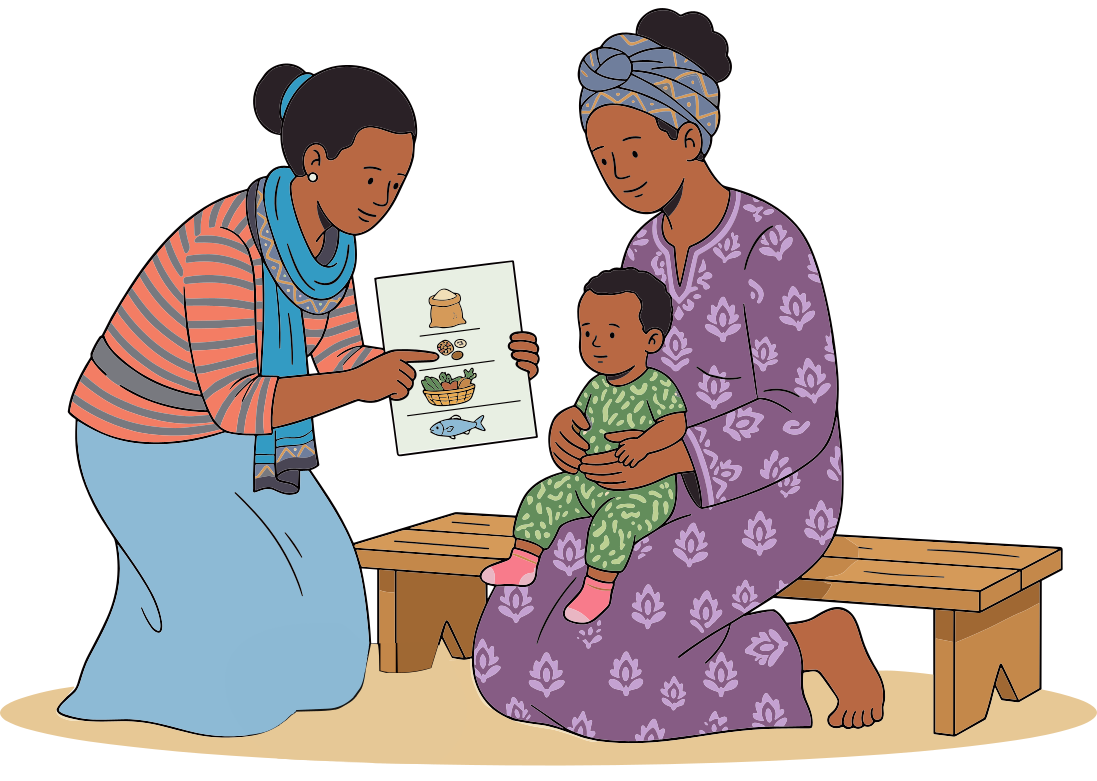
Nutrition Advice
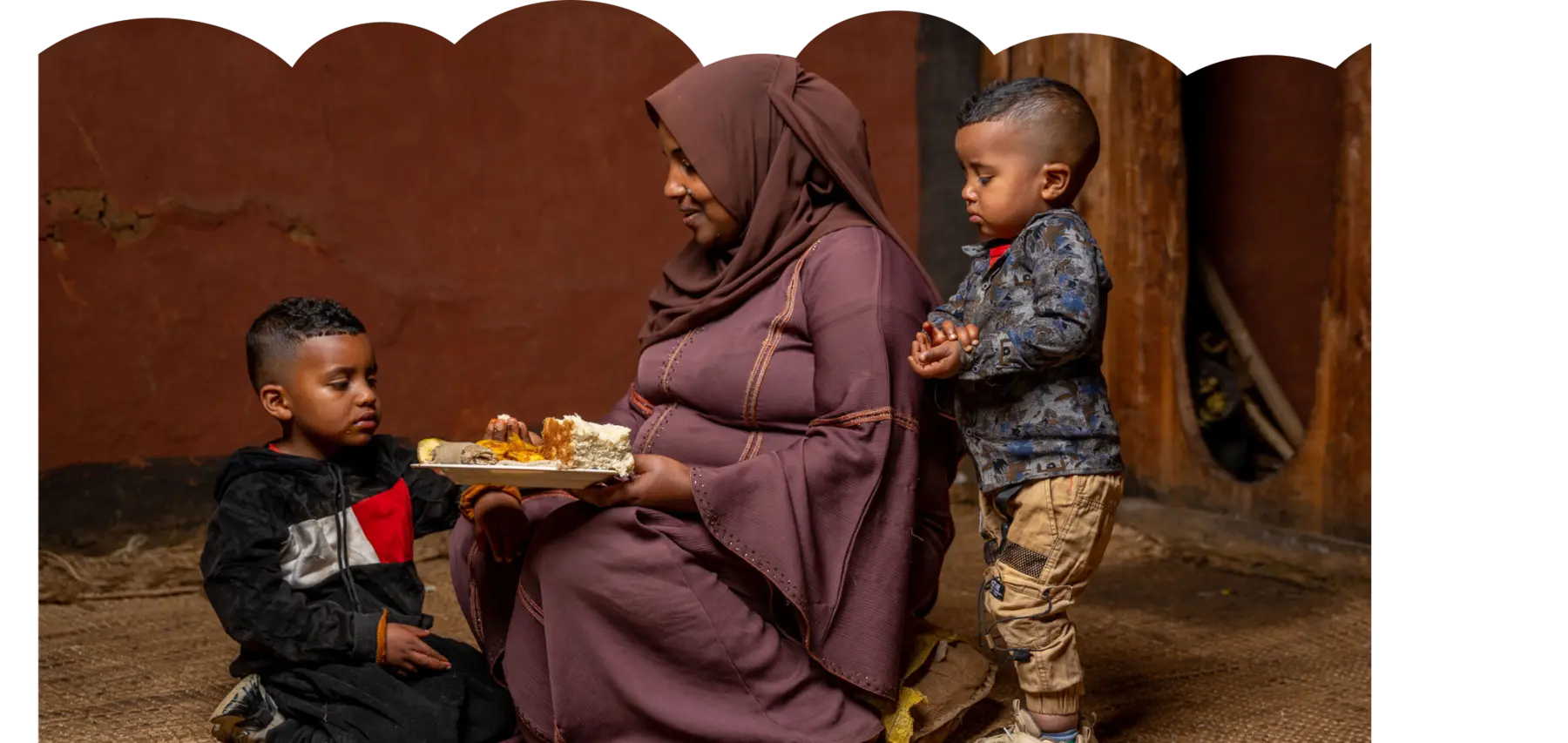
A mother may receive nutrition advice at a health post
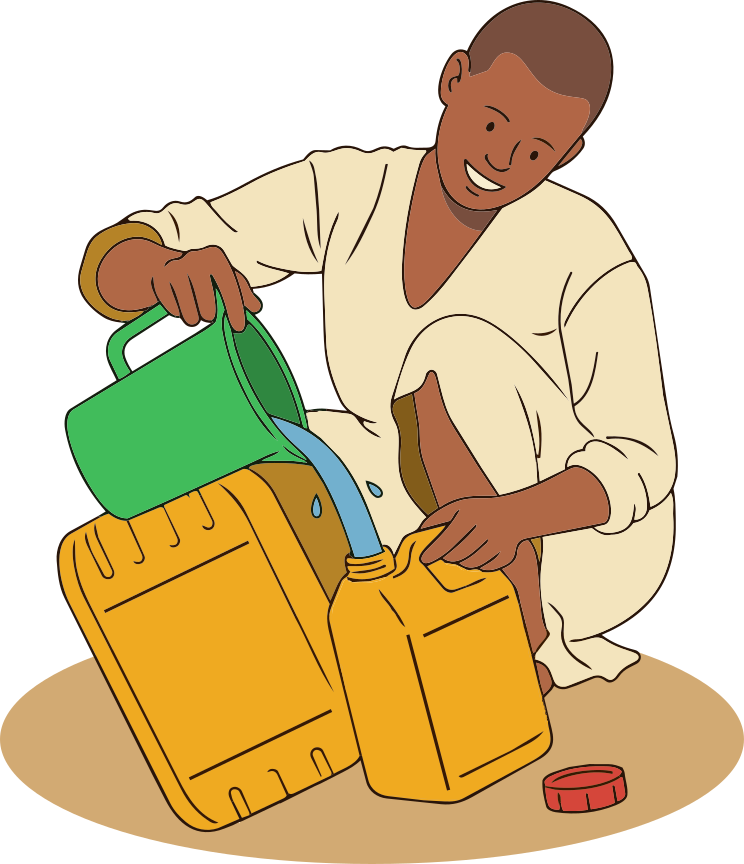
Safe Water
But if her water is unsafe, the child still falls ill.
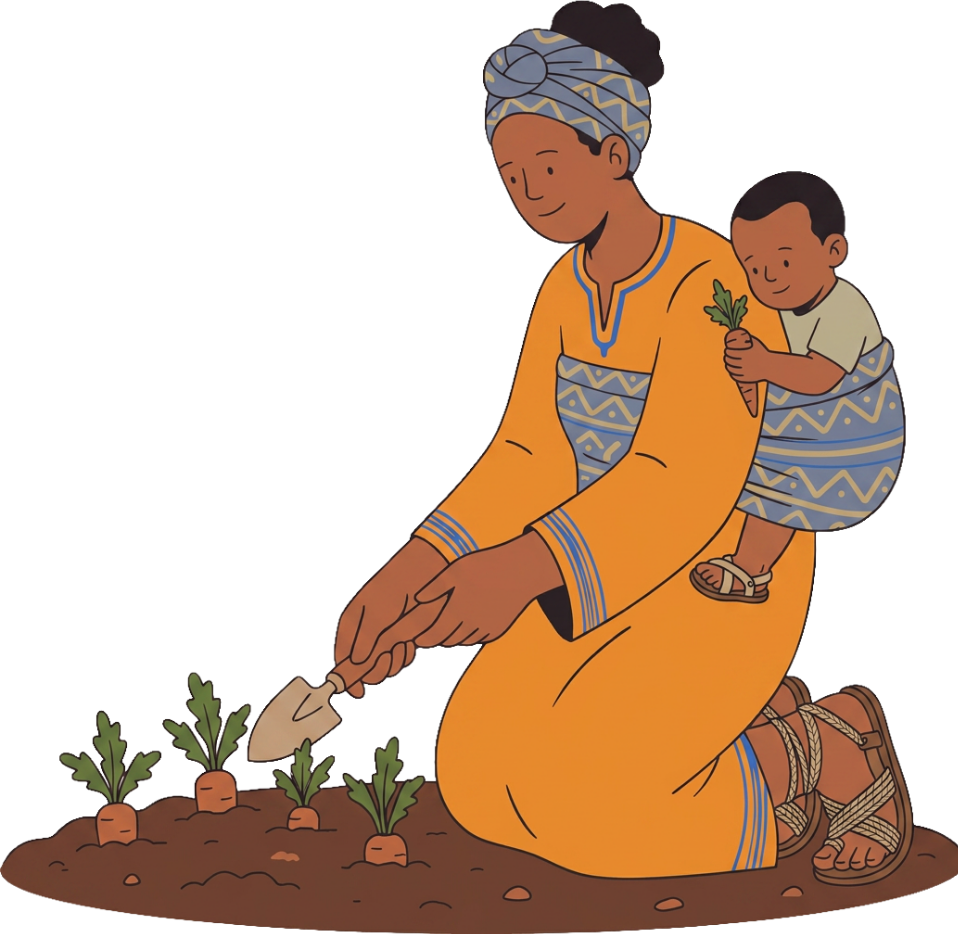
Diverse Food
A family may have clean water, but without diverse food, the child stays undernourished
Hygiene at school
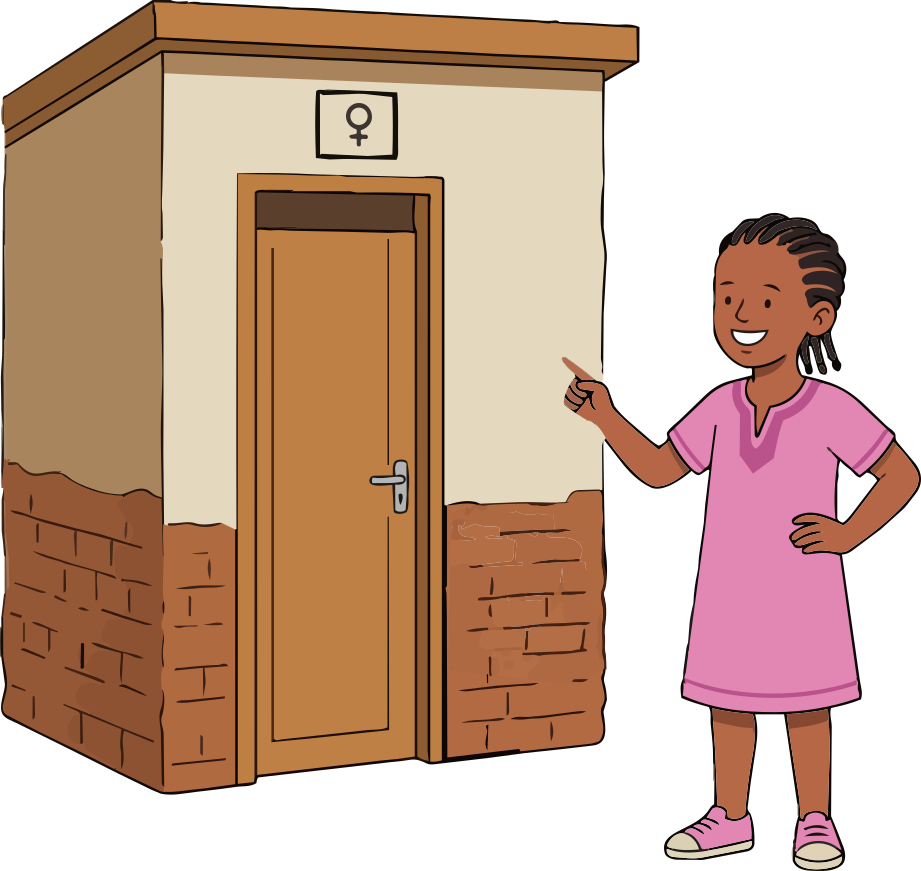
A girl may learn about hygiene at school, but without a private toilet, that knowledge fades into frustration.

Unsafe water causes disease, which stops a child absorbing nutrients. Poor nutrition weakens immunity, which makes illness more likely. Climate stress strains water and food supplies at the same time.
Fixing any one alone is like repairing a single cog in a machine breaking down across the board.



Ethiopia’s Commitment to Zero Stunting
Seqota declaration
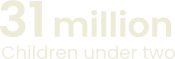
Its ambition was unprecedented: to eliminate stunting among children under two years of age by 2030.
Learn more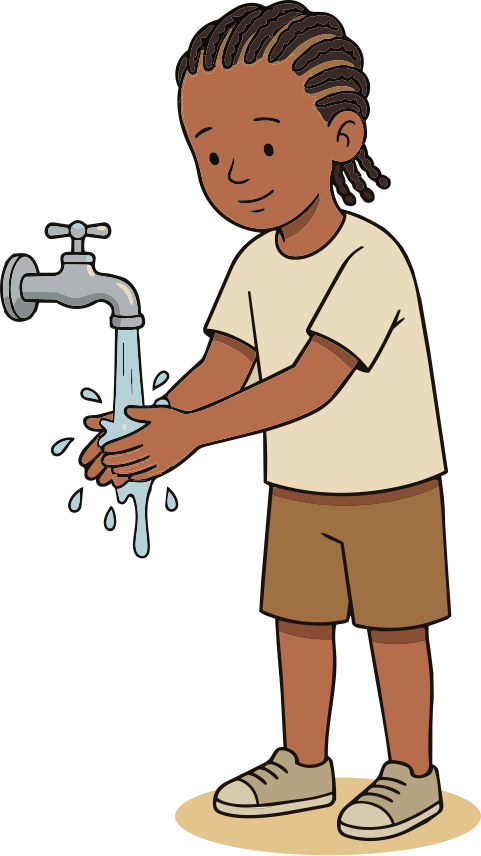
38 %
Of Ethiopian children under five are stunted — too short for their age due to chronic malnutrition
17 %
of GDP
Is lost in Ethiopia each year to undernutrition
69 %
of households
Lack adequate access to food all year round
Over 50 %
of households
lack access to clean and safe drinking water (in focus areas)

In 2015, Ethiopia made one of the most ambitious child-health commitments on the continent: to end stunting in every child under two by 2030.
When the Government of Ethiopia launched the Seqota Declaration in 2015, nearly four in ten children under five — around 38% — were stunted, too short for their age because of chronic malnutrition in the first 1,000 days. The cost was national as well as personal: Ethiopia was estimated to lose close to 17% of its GDP each year to the long-term effects of undernutrition. The Declaration set out a deliberate three-phase path to tackle it.
Testing what works
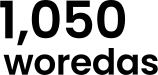
Piloting integrated interventions in selected woredas in Amhara and Tigray, generating evidence about which approaches were most effective in the Ethiopian context.
Refining for scale
Building on innovation-phase lessons, refining successful approaches, and preparing them for wider implementation. The Healthy Village Programme came alive in this phase.
Delivering nationwide impact
Taking proven approaches to scale across Ethiopia through strengthened government systems, coordinated financing, and community ownership.

The Healthy Village Programme was not developed in isolation
It was a deliberate response to this national call designed from day one to feed evidence into Ethiopia’s own systems.
Learn more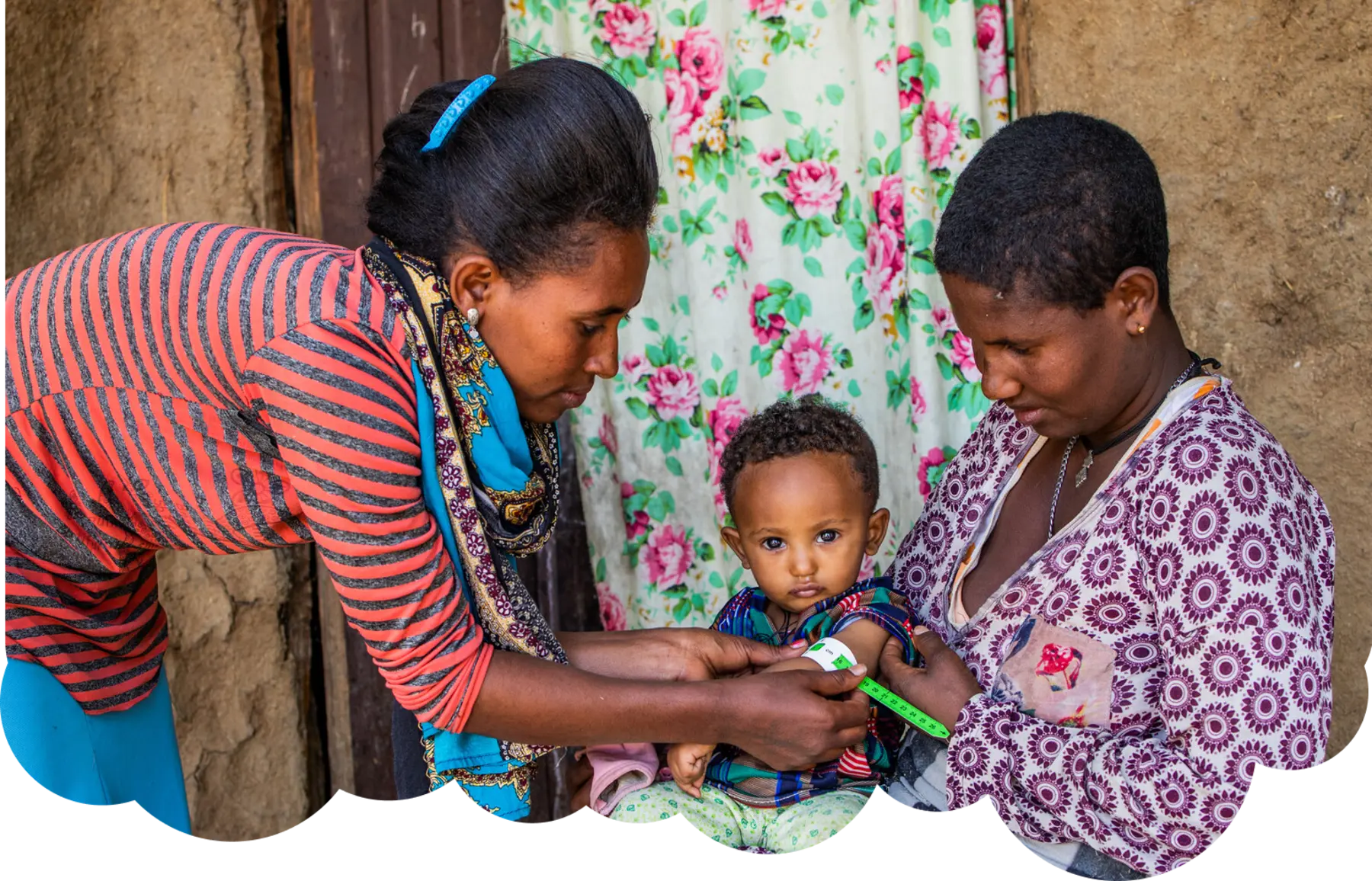

The Healthy Village Approach

The Healthy Village approach connects what daily life already connects
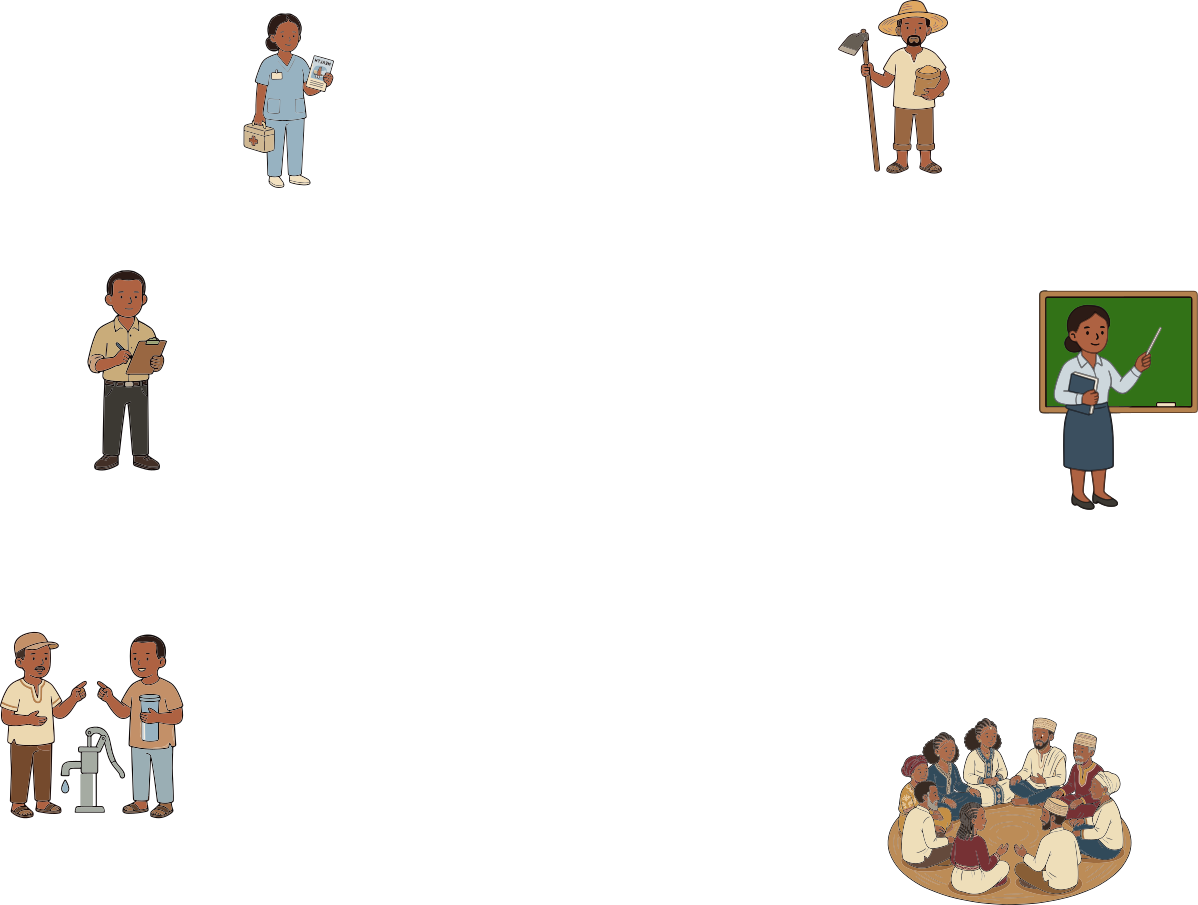
Instead of treating each challenge alone, the model weaves together three things usually delivered separately: Water, Sanitation and Hygiene (WASH); Food and Nutrition Security; and Maternal and Adolescent Health. Around them sit the people who make integration real — Health Extension Workers, Development Agents, WASH Committees, VESA savings groups, and local entrepreneurs— and two forces that multiply everything: gender and climate resilience. This is the nexus approach: shifting attention from symptoms to root causes, so water, food, health and behaviour reinforce one another. The test was never the diagram. It was whether integration could be seen on the ground, household by household.

Water, Sanitation & Hygiene
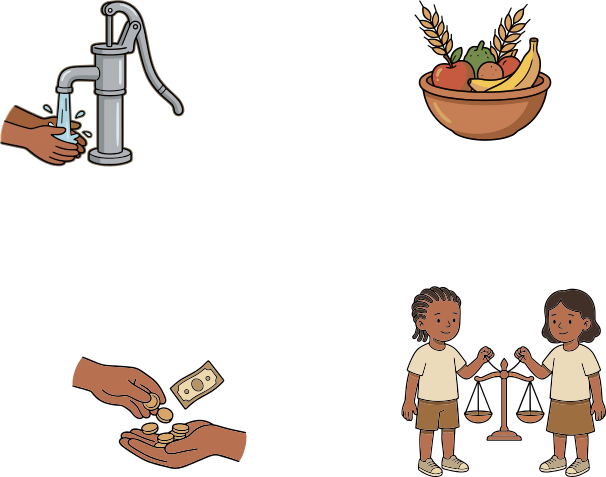
Safe water, latrines and handwashing keep illness at bay, so children stay well enough to grow.
Food & Nutrition Security
Diverse, nutrient-rich food — grown at home and bought locally — gives children and mothers what growth requires.
Access to Finance
Savings groups and small loans let families afford nutritious food and clean-water products, even through lean months.
Gender Equality
From women leading water committees to girls running school clubs and managing their periods with dignity — fairer roles at every age.
Health Extension Workers
Ethiopia's frontline health workers: home visits, growth monitoring and feeding advice that reach mothers and young children directly.
Local Entrepreneurs
They build the local market for clean-water and nutrition products, so families can keep buying what keeps children healthy.
Development Agents
Government Extension Workers that train farmers in nutrition-rich, climate-smart growing, so home gardens and poultry put better food on the plate.
Schools
Where children learn hygiene and nutrition, and adolescent girls can manage their periods easily and with dignity, so they can stay in class.
WASH Committees
Community-elected committees that manage and maintain local water schemes — increasingly led by women.
VESAs (Village Economic and Social Associations)
Community savings-and-loan groups giving families a financial buffer, plus a space to learn about health and gender equality.


Stories from the Field

Water Systems
Mossa Alemu, Shebel Berenta
One well, barely used. Then it changed everything.
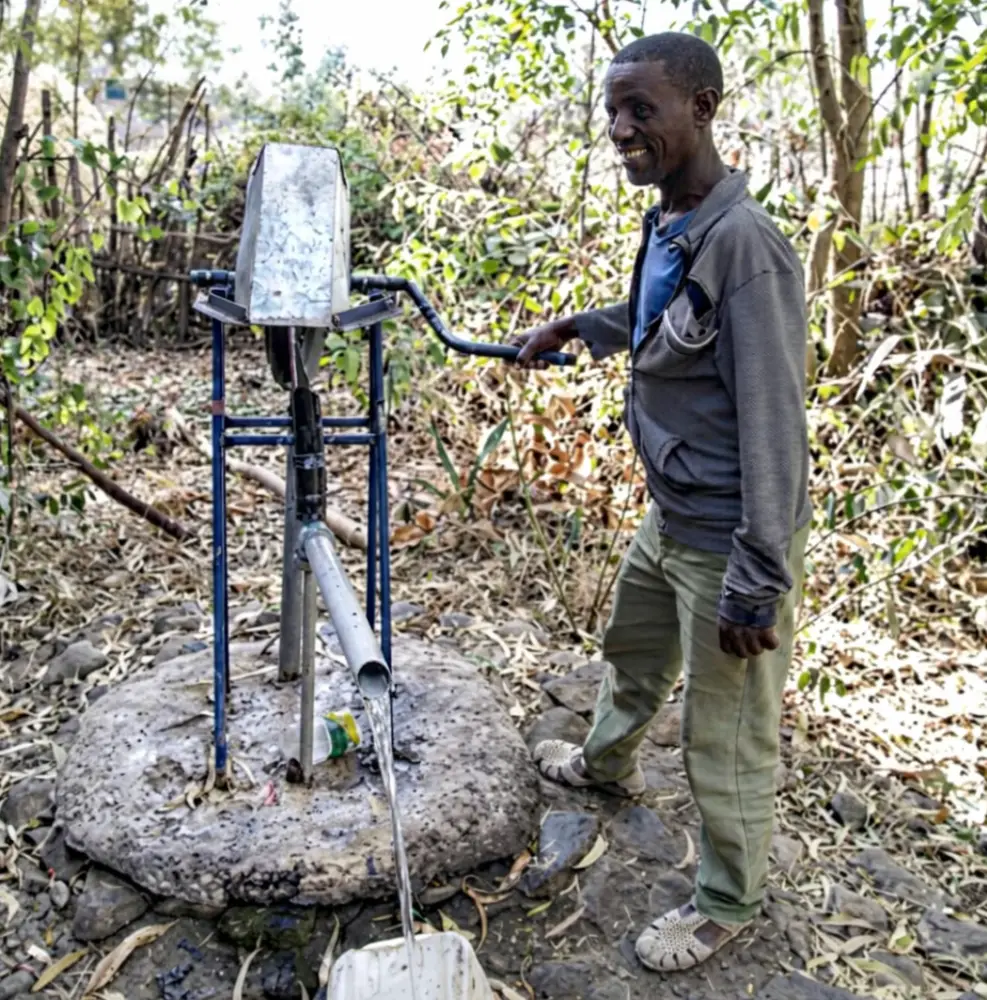
“We, especially our children, were usually sick in the stomach. Health workers said it was a waterborne disease.”
Schools & MHM
Andualem Anteneh, Enebre Primary
Whether school is a place of dignity can come down to a private toilet.
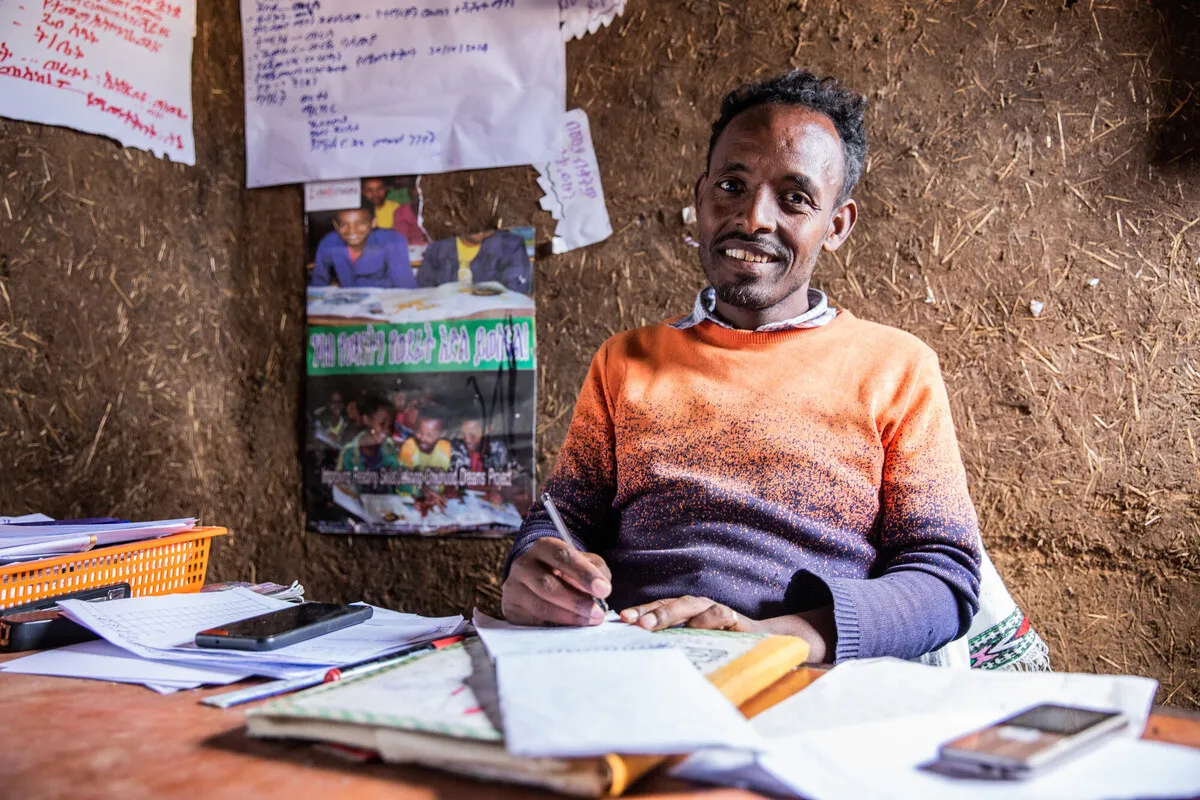

Women’s Leadership
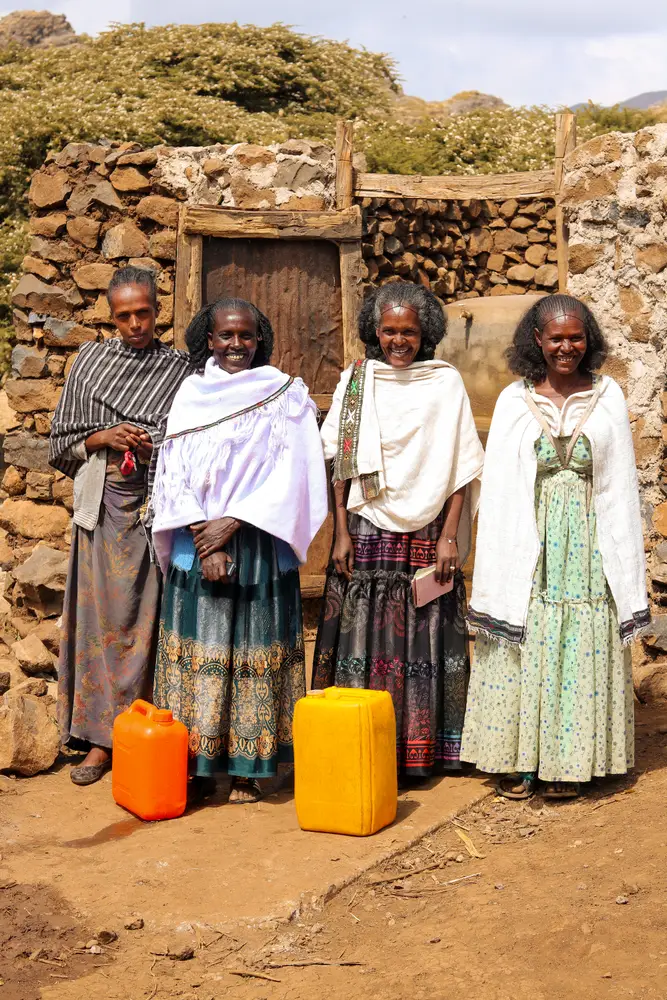
Behafta Redai & Behafta Abrha, Emba Alaje, Tigray
Leading a water committee was once seen as men’s work. Not any more.

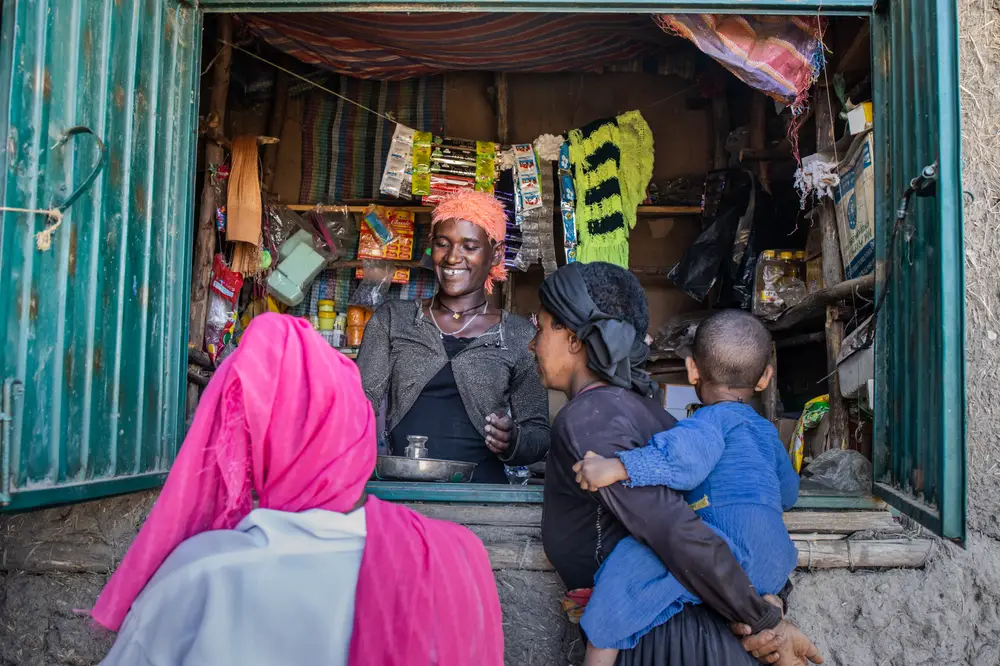
Mitin
Muluwork Tesfaw, Mergech kebele
Mothers were taught how to make it. Almost no one could buy it.
“I don’t want to worry about the profit now, because I know I am selling something beneficial.”



What the Village Taught Us

The programme was not only implemented. It learned, adapted, and evolved. Healthy Village was not a fixed blueprint — it was a learning process shaped by digital tools, community feedback, health data, and moments of crisis.
Learn more

Numbers to Highlight

33 villages
Met the Healthy Village standard in 2025
94 groups
Mother-to-Mother groups formed
Reaching close to 1,000 children under two
30,000
Farmers trained
~40
Rehabilitated water schemes
27,000
Cooking demonstrations



From Pilot to Scale

The ambition was never only to deliver activities. It was to build a model Ethiopia could own, adapt, and scale.
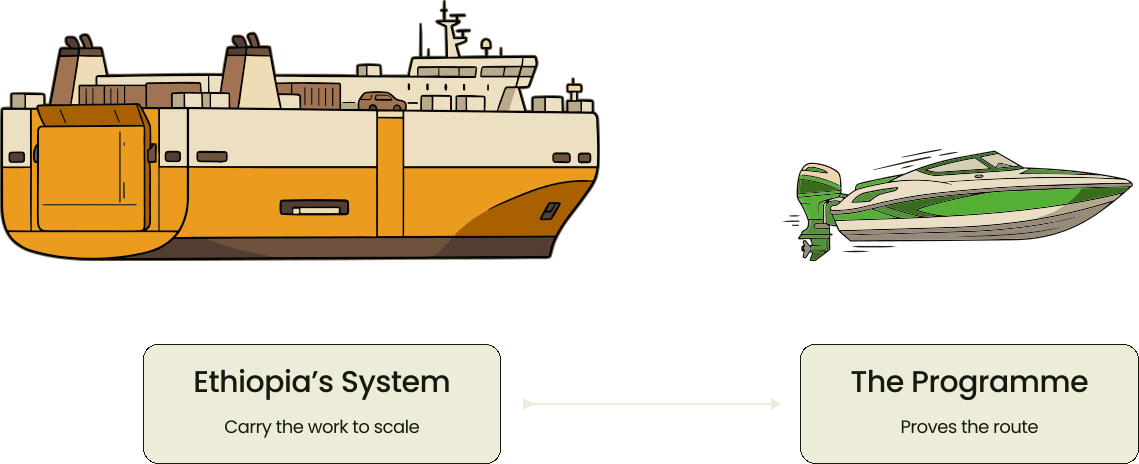
Working alongside the Seqota Declaration, the programme tested every part of its approach against one question: can this run inside government, without donor funding? What survived became the Malnutrition-Free Healthy Village (MFHV) model — published by the Ministry of Health in 2026 as the unit of scale for Ethiopia’s national plan. A programme is a speedboat: fast, nimble, able to prove a route. A system is a tanker: vast, slow to turn, but able to carry a whole nation. The programme was the speedboat; Ethiopia’s own systems are the tanker now carrying the work forward.





The Way Forward

The Healthy Village Programme closes in 2026. The work it contributed to does not.
What endures is not a programme that simply ends, but capacity that keeps doing its job after the funding has gone — government workers trained in integrated approaches, digital growth monitoring embedded in e-CHIS, entrepreneurs supplying their communities, WASH Committees and savings groups run by communities themselves, and national guidelines now shaping how WASH and nutrition are delivered far beyond the original woredas. None of it depends on the programme any more. That was always the point.
Four conditions for scale
The system has to be owned by the state, not propped up by parallel NGO structures.
Local entrepreneurs must find it worthwhile to supply nutritious food, sanitation products, and water services, so supply does not collapse when funding does.
Behaviour change is driven from within, creating steady demand for the services that keep children healthy.
Funding builds capacity and systems rather than substituting for them.
The tools, the evidence, the trained workforce and the partnerships are ready. The programme was always the speedboat. From here, the tanker carries the work — Ethiopia’s own systems, Ethiopia’s own people, and the commitment the country made in 2015, now closer than ever to being kept.
You've seen the shape of the story

Now follow it in full from the national challenge, to the villages where integration became real, to the model now ready to carry it forward.
Start with chapter 1